



Correspondance
d’un
siècle
مراسلات
قرن
Série de cartes postales performatives, fixes et animées
De la Casbah à Bordeaux
2023-2025
Quatrième carte : La Passeuse, vidéo IA — 36 secondes — 2025
Peut-on transmettre ce que l’on n’a pas vécu ? Quelle réalité pour ces souvenirs qui oscillent entre conscient et inconscient ? L’art permet-il de transcender les silences ? Autant de questions que Zohra Hassani se pose tandis qu’elle bascule entre vécu personnel et ressenti transmis.
Mi-française, mi-algérienne, ni française, ni algérienne – c’est ainsi qu’elle se décrit à la suite d’un parcours scolaire et familial ponctué de silences et de dénis. Son regard sur l’Algérie est tout d’abord celui d’une enfant y ayant été élevée, des âges de deux à quatre ans, par trois générations de femmes, moment qui s’avérera déterminant dans la construction de son identité. Son investigation personnelle, elle l’entreprend en tant que jeune adulte lorsqu’elle se rend de nouveau, seule, en Algérie, avide de se créer son propre regard sur un pays qu’elle a avant tout hérité à travers les yeux de sa mère et de sa grand-mère. Elle, qui si longtemps s’était vue comme française, « née en France », y ressent un sentiment d’appartenance, une intégration à une communauté qui, si elle porte un œil critique sur la position de la femme dans la société algérienne, la rappelle à son long aveuglement quant à ses racines, et à son déracinement.
Portant dès lors un autre regard sur son appartenance, elle ne peut ignorer les expériences et ressentis qui lui ont été transmis. C’est en particulier ceux de la colonisation qui lui reviennent. Elle revoit, et revit, des expériences qu’elle n’a pourtant pas vécues, traces d’un héritage qui dépasse les mots. Ces traces viennent à endosser une nouvelle symbolique, puissante, presque sacrée, qu’elle n’a d’autre choix que d’investir dans son travail d’artiste.
L’art permet à Zohra Hassani de donner matière à ses réflexions, et ce faisant, d’entrer en accord avec elle même. Elle donne à voir, à vivre, ce qu’elle nomme cérémonial transformateur, par lequel ces traces s’expriment par des gestes, souvent répétés, leur conférant une dimension d’actes réparateurs. Ces mouvements, qu’elle distingue de sa propre volonté, sont intelligents, comme issus d’une mémoire subconsciente. Par leur biais, la réparation se fait triple. D’abord pour elle, car elle comble les vides d’un héritage personnel lacunaire ; elle transcende une douleur qui n’est pas que sienne, mais aussi celle de générations passées. Ensuite, pour ces lignées, comme gage de respect, de reconnaissance. Enfin, pour son public, en reconfigurant sa perception et l’inscrivant dans une histoire plus large.
« Sans racines, pas d’ancrage. » Transmettre un héritage devient pour Zohra Hassani une lutte pour vivre : s’inscrire dans un passé pour se projeter dans un futur. Si de ses œuvres émane une dimension rituelle, c’est parce que par elle-même, elle se réfère à quelque chose de plus large, à une identité qu’elle sait collective. De ce collectif prisonnier de ses silences, elle se libère ; ce collectif prisonnier de ses silences, elle le libère. Ainsi engage-t-elle souvent son corps dans sa pratique. Ce corps, écho d’une époque, d’un genre, d’une histoire, elle le réexploite et en diffuse toutes les réalités : celles d’une double-culture, d’une femme, d’une petite enfant de colonisés. Et par la sentience de son corps, elle communique des messages, passés ou oubliés à travers les générations.
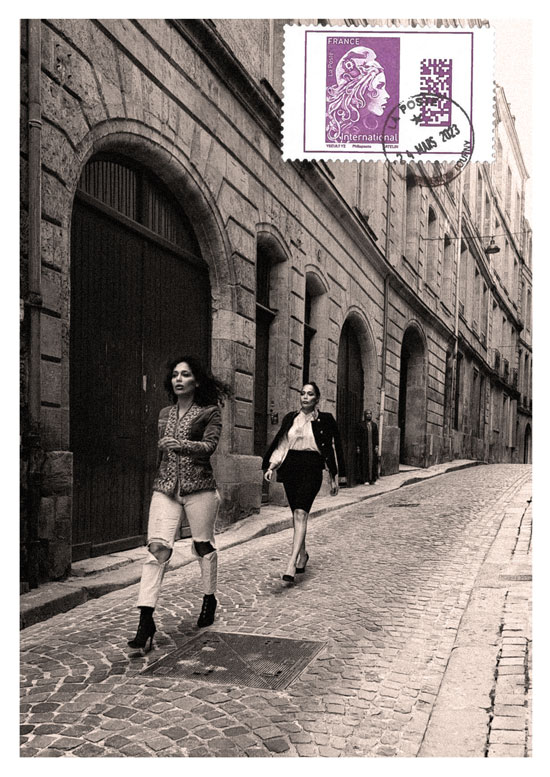
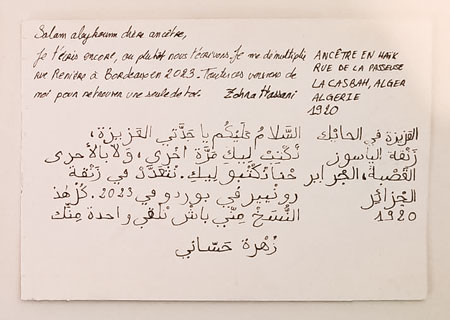
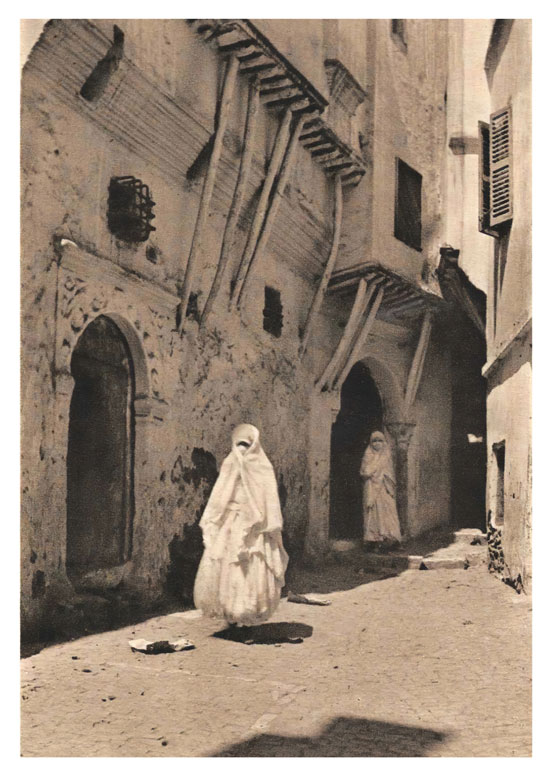
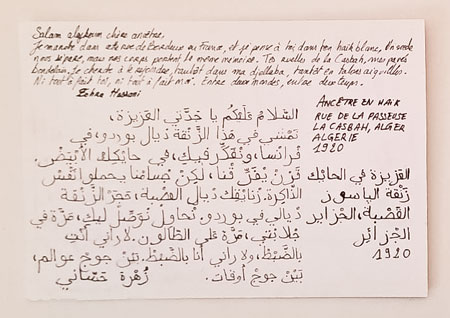
C’est aussi son corps qu’elle donne à voir dans Correspondance d’un siècle – De la Casbah à Bordeaux. Se basant sur une carte postale d’archive, elle retisse le lien imperceptible entre une femme algérienne du siècle dernier et elle aujourd’hui, vivant à Bordeaux. Dans cette lignée, elle est la suite de cette femme, tantôt working girl, fruit de notre époque, tantôt partagée, alliant son jean à sa veste de karakou.
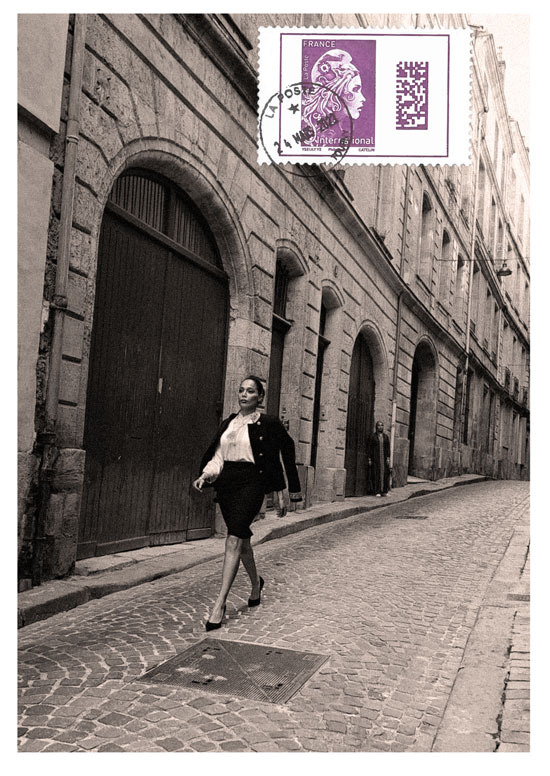
Par sa quatrième et dernière carte postale animée (vidéo de 36 secondes), l’artiste abolit les frontières spatio-temporelle et endosse la figure de La Passeuse. Dans cet espace sacré, hors du monde ordinaire, la femme et ses différentes existences se rassemblent, se superposent et fusionnent en un seul corps.
Ce processus de fusion opère comme un geste de réparation symbolique, conférant à chacune une dignité nouvelle.
Roxane Latrêche | Commissaire d’exposition, écrivaine et RP.
سلسلة بطاقات بريدية أدائية
من القصبة إلى بوردو
2023-2025
هل يمكن نقل ما لم نعيشه؟ ما هي حقيقة هذه الذكريات التي تتأرجح بين الواعي واللاواعي؟ هل يتيح الفن تجاوز الصمت؟ هذه كلها أسئلة تطرحها زهراء حساني بينما تنتقل بين التجربة الشخصية والإحساس المنقول.
نصف فرنسية، نصف جزائرية، لا فرنسية ولا جزائرية – هكذا تصف نفسها بعد مسار دراسي وعائلي اتسم بالصمت والإنكار. إن نظرتها إلى الجزائر هي في البداية نظرة طفلة نشأت فيها، من عمر سنتين إلى أربع سنوات، على يد ثلاث أجيال من النساء، وهي فترة ستثبت أهميتها في بناء هويتها. تبدأ تحقيقها الشخصي في مرحلة الشباب عندما تعود بمفردها إلى الجزائر، شغوفة بخلق رؤيتها الخاصة حول بلد ورثته في المقام الأول عبر عيني والدتها وجدتها. هي، التي اعتبرت نفسها لوقت طويل فرنسية «ولدت في فرنسا»، تشعر هناك بانتماء واندماج في مجتمع، وهو مجتمع رغم انتقاده لوضع المرأة في المجتمع الجزائري، يذكّرها بجهلها الطويل تجاه جذورها وباقتلاعها.
ومنذ ذلك الحين، ومع تبنيها لنظرة مختلفة على انتمائها، لا يمكنها تجاهل التجارب والمشاعر التي نُقلت إليها. ومن أبرز هذه التجارب تلك المتعلقة بالاستعمار. تعيد النظر وتعيش تجارب لم تعشها بنفسها، آثار إرث تتجاوز الكلمات. هذه الآثار تتخذ رمزية جديدة، قوية، وشبه مقدسة، لا تجد أمامها سوى أن تستثمرها في عملها الفني.
يتيح الفن لزهراء حساني تحويل تأملاتها إلى مادة، ومن خلالها، الوصول إلى توافق مع ذاتها. تعرض ما تسميه الطقس التحويلي، حيث تعبر هذه الآثار من خلال حركات، غالبًا متكررة، تمنحها بعدًا من الأفعال الإصلاحية. هذه الحركات، التي تميزها عن إرادتها الخاصة، ذكية، وكأنها نابعة من ذاكرة لاواعية. ومن خلالها، يتم الإصلاح على ثلاثة مستويات: أولاً لنفسها، إذ تملأ الفراغات في إرث شخصي ناقص؛ تتجاوز ألمًا ليس خاصًا بها فقط، بل ألم أجيال ماضية. ثانيًا لهذه السلالات، كدليل على الاحترام والتقدير. وأخيرًا لجمهورها، بإعادة تشكيل إدراكهم ووضعه ضمن تاريخ أوسع.
«بدون جذور، لا يوجد ترسيخ.» يصبح نقل الإرث بالنسبة لزهراء حساني صراعًا للعيش: التمسك بالماضي من أجل الانطلاق نحو المستقبل. وإذا كان لعملها بعد طقسي، فذلك لأنها تستند إلى شيء أوسع، إلى هوية تعرف أنها جماعية. ومن هذا الجمع الصامت تتحرر؛ ومن هذا الجمع الصامت تحرره. وهكذا غالبًا ما تشرك جسدها في ممارستها. هذا الجسد، صدى زمن وجنس وتاريخ، تعيد استغلاله وتنقل كل واقعيته: واقع ثقافتين، امرأة، طفلة من المستعمرين. ومن خلال إحساس جسدها، تنقل رسائل، سواء كانت ماضية أو منسية عبر الأجيال.
كما تعرض جسدها في عملها *مراسلات قرن – من القصبة إلى بوردو*. بالاستناد إلى بطاقة بريدية أرشيفية، تعيد نسج الرابط الخفي بين امرأة جزائرية من القرن الماضي وبينها اليوم، وهي تعيش في بوردو. في هذا السياق، هي امتداد لتلك المرأة، أحيانًا *working girl* ثمرة عصرنا، وأحيانًا ممزقة، جامعًة بين جينزها وسترة الكراكو الخاصة بها.
من خلال بطاقتها البريدية الرابعة والأخيرة (فيديو مدته 36 ثانية)، تُلغي الفنانة الحدود المكانية والزمانية وتتقمص شخصية الناقلة. في هذا الفضاء المقدس، خارج العالم العادي، تتجمع المرأة ووجوداتها المختلفة، وتتراكب وتندمج في جسد واحد.
يعمل هذا الانصهار كفعل رمزي للإصلاح، يمنح كل واحدة منهن كرامة جديدة.
روكسان لاتريش | مفوضة معرض، كاتبة وعلاقات عامة.
Correspondence
of a
Century
Series of Performative Postcards
From the Casbah to Bordeaux
2023–2025
Can we transmit what we have not lived through? What reality lies in these memories oscillating between the conscious and the unconscious? Can art transcend silence? These are the questions that Zohra Hassani asks herself as she moves between personal experience and inherited emotion.
Half French, half Algerian, neither fully French nor fully Algerian—this is how she describes herself after a school and family upbringing marked by silences and denials. Her first relationship with Algeria is that of a child who lived there between the ages of two and four, raised by three generations of women, a formative moment in the construction of her identity. Her personal investigation begins later, as a young adult, when she returns alone to Algeria, eager to forge her own vision of a country she had inherited primarily through the eyes of her mother and grandmother. She, who for so long had seen herself as French, “born in France,” experiences there a sense of belonging, an integration into a community that—while she maintains a critical view of the place of women in Algerian society—also confronts her with her long blindness to her roots and to her uprootedness.
From then on, adopting a different perspective on her sense of belonging, she can no longer ignore the experiences and emotions that have been passed down to her. In particular, those linked to colonization resurface. She sees, and relives, experiences she never lived herself—traces of a heritage that goes beyond words. These traces take on a new, powerful, almost sacred symbolism, which she has no choice but to invest in her artistic work.
Through art, Zohra Hassani gives form to her reflections and, in doing so, comes into alignment with herself. She makes visible and tangible what she calls a transformative ceremonial, through which these traces are expressed by gestures, often repeated, granting them the dimension of reparative acts. These movements, which she distinguishes from her own will, are intelligent, as if arising from a subconscious memory. Through them, the process of repair becomes threefold. First, for herself, as she fills the gaps of a fragmented personal heritage; she transcends a pain that is not hers alone, but also that of past generations. Then, for these lineages, as a sign of respect and recognition. Finally, for her audience, by reconfiguring perception and situating it within a broader history.
“Without roots, there is no anchoring.” Transmitting a legacy becomes for Zohra Hassani a struggle for survival: inscribing oneself in the past in order to project into the future. If a ritual dimension emanates from her works, it is because, through herself, she refers to something larger—to an identity she knows to be collective. From this collective, imprisoned by silence, she frees herself; this collective, imprisoned by silence, she also frees. Thus, she often engages her body in her practice. This body, echo of an era, a gender, a history, she reclaims and diffuses in all its realities: those of double culture, of womanhood, of a young child of the colonized. And through the sentience of her body, she communicates messages—past or forgotten—across generations.
It is also her body that she presents in Correspondence of a Century – From the Casbah to Bordeaux. Drawing on an archival postcard, she weaves anew the imperceptible bond between an Algerian woman of the last century and herself today, living in Bordeaux. Within this lineage, she is the continuation of that woman—at times a working girl, a product of our era, at other times divided, pairing her jeans with her karakou jacket.
Through her fourth and final animated postcard (36-second video), the artist abolishes spatio-temporal boundaries and assumes the figure of The Ferryperson. In this sacred space, outside the ordinary world, the woman and her different existences gather, overlap, and merge into a single body.
This process of fusion operates as a gesture of symbolic repair, granting each a renewed dignity.
Roxane Latrêche | Exhibition Curator, Writer and PR.