



Sous la peau
la peau
de la
Palestine
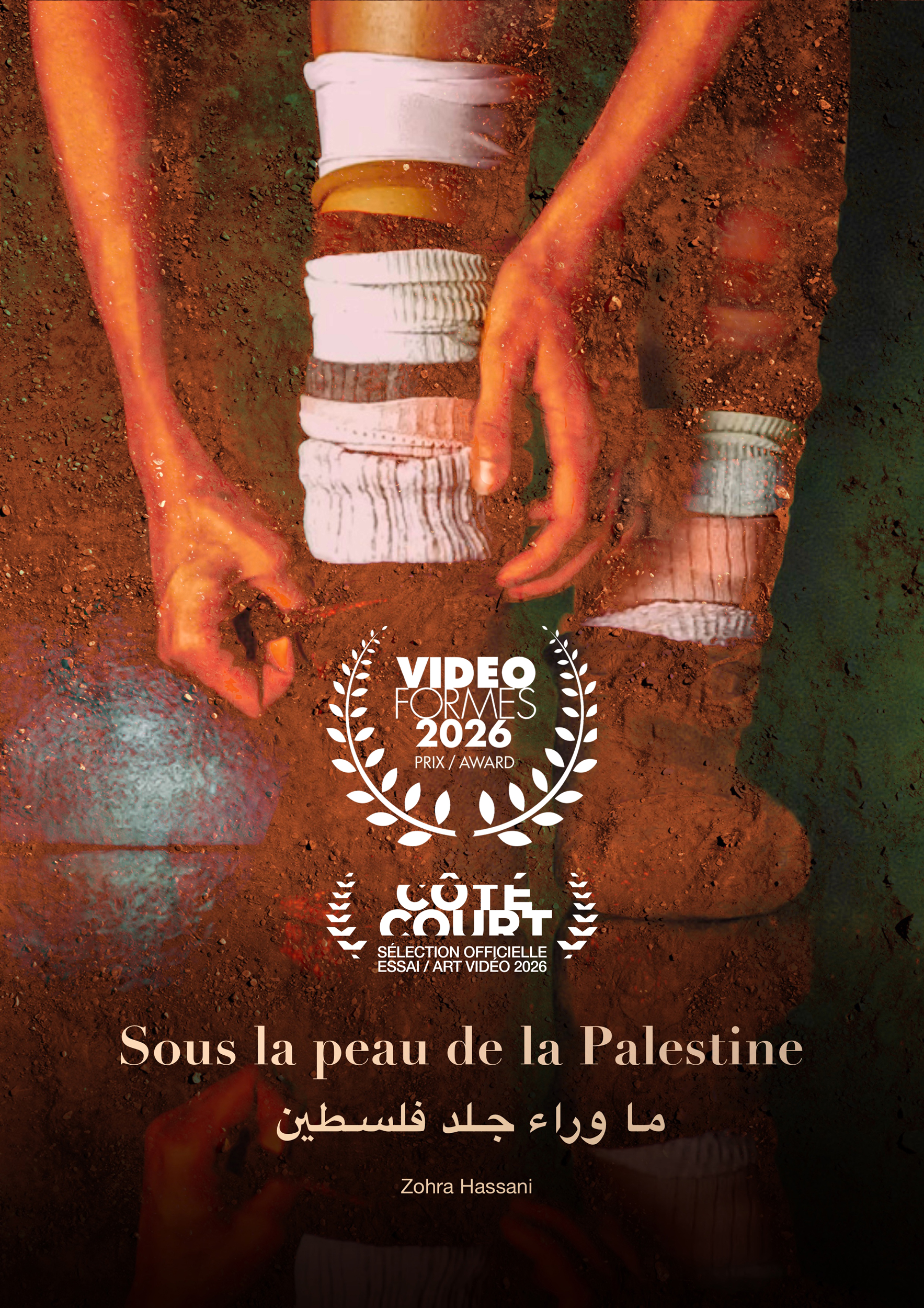
Sous la peau de la Palestine est une vidéo-performance en forme de diptyque. Elle est d’une importance singulière dans l’œuvre de Zohra Hassani car elle confirme son orientation en direction d’une pensée en mouvement.
Sur l’écran de gauche, par un cadrage resserré et un gros plan, nous pouvons observer l’artiste qui retire soigneusement, une à une, chacune des chaussettes superposées qu’elle porte aux pieds. Ce geste répétitif paraît interminable jusqu’à voir enfin ses pieds nus, alors que, sur l’écran de droite, les chaussettes se retrouvent empilées, une à une, sur un sol de terre et de sable. À la toute fin, le changement de point de vue fait apparaître les contours d’une carte de la Palestine. L’artiste suggère ici un rapport charnel à la terre, une idée de dépouillement scrupuleux, de gestes quotidiens répétés mais aussi de déplacements.
Des objets, des corps, des points de vue, les couleurs des produits manufacturés à gauche et les matériaux naturels à droite, les couleurs ocres et organiques, indiquent une relation à l’essentiel, un ancrage à la terre mais aussi au monde tel qu’il est. Ce rituel de dépouillement, réalisé avec des matériaux pauvres – la chaussette portée par tous- renvoie à l’intime comme au mondial. L’amas de ces chaussettes quotidiennes évoque les nombreuses images de corps empilés sous des décombres et par là même aussi sans doute aux charniers palestiniens. La simplicité du dispositif, la mise en parallèle de ces deux actions conjointes et reliées, « se dévêtir » et « définir une forme », propose une version sobre et limpide d’une situation complexe et dramatique. Néanmoins, cette relation intime aux images contemporaines est insinuée sans violence. La Palestine est représentée ici dans tout ce qu’elle porte de mémoires enfouies, de reliefs et de résilience. L’accumulation de chaussettes s’érige en symbole de vestiges dormants mais tout de même présents dans la terre. Par le pied, il y a l’idée d’un pays dont les habitants sont chassés de leur terre, de déplacements forcés, donc au plus proche du dénuement, et par le même mouvement, d’enracinement. C’est un lien paradoxal et fragile. Un lien sacré, indéfectible à la terre est suscité.
Enfin, on ne peut s’empêcher d’y voir une référence plastique à l’Arte Povera ainsi qu’au Nouveau Réalisme, à ses accumulations d’objets et à la société de consommation dont Zohra Hassani prend ici le contre-pied radical.
Fadila Yahou | Historienne et critique d’art, docteure en histoire de l’art.
فيلم / أداء، 4 دقائق 50 ثانية، HD، لون،
2025
ما
وراء
جلد
فلسطين
«تحت جلد فلسطين» هي فيديو-أداء يتخذ شكل ديبتيك. وتُمثّل هذه العمل أهمية خاصة في مسار زهرة حساني، إذ يؤكد توجهها نحو فكرٍ يتقدّم في حركة مستمرة.
على الشاشة اليسرى، ومن خلال كادر ضيق ولقطة قريبة، نرى الفنانة وهي تنزع بعناية، واحدة تلو الأخرى، كل الجوارب المكدّسة التي ترتديها في قدميها. يبدو هذا الفعل التكراري بلا نهاية إلى أن تظهر قدماها حافيتين أخيراً، بينما تتكدس الجوارب، واحدة بعد الأخرى، على أرض من التراب والرمل على الشاشة اليمنى. وفي اللقطة الأخيرة، يكشف تغيّر زاوية النظر عن ملامح خريطة فلسطين. تقترح الفنانة هنا علاقة جسدية مع الأرض، فكرة التجرد الدقيق، وتكرار الإيماءات اليومية، وكذلك التنقلات.
الأشياء، الأجساد، وجهات النظر، ألوان المنتجات المصنّعة إلى اليسار والمواد الطبيعية إلى اليمين، الألوان الترابية والعضوية—كلها تشير إلى علاقة مع الجوهر، وإلى جذور في الأرض ولكن أيضاً إلى العالم كما هو. هذا الطقس من التجرد، المنجز بمواد فقيرة — الجورب الذي يرتديه الجميع — يحيل إلى الحميمي كما إلى العالمي. ويستدعي تكدّس هذه الجوارب اليومية صوراً عديدة لأجساد مكدسة تحت الأنقاض، وربما أيضاً إلى المقابر الجماعية الفلسطينية. إن بساطة الآلية، والموازاة بين هذين الفعلين المتلازمين والمتصلين، «التعرّي» و«رسم هيئة»، تقدم رؤية رصينة وواضحة لوضع معقد ومأساوي. ومع ذلك، تُلمَّح هذه الصلة الحميمة بالصور المعاصرة دون عنف. ففلسطين تظهر هنا بكل ما تحمله من ذاكرات مطمورة، ومن تضاريس وقدرة على الصمود. ويتحول تراكم الجوارب إلى رمز لآثار نائمة لكنها ما تزال حاضرة في الأرض. ومن خلال القدم، تُستدعى فكرة وطنٍ يُهجّر أهله من أرضهم، وفكرة التنقلات القسرية، أي أقصى درجات التجرّد، وبالحركة نفسها، فكرة التجذر. إنّه رابط متناقض وهش. رابط مقدّس، لا ينفصم، مع الأرض.
وأخيراً، لا يمكن تجاهل الإشارة الجمالية إلى حركة «آرتي بوفيرا» وكذلك «الواقعية الجديدة» بما فيها من تكديس للأشياء ومن نقدٍ لمجتمع الاستهلاك، وهو ما تتخذه زهرة حساني هنا على نحوٍ نقيض وجذري.
فضيلة ياهو | مؤرخة وناقدة فنية، دكتورة في تاريخ الفن.
Under
the
Skin
of
Palestine
Under the Skin of Palestine is a video performance conceived as a diptych. It holds a singular importance within Zohra Hassani’s work, as it confirms her movement toward a thinking-in-motion approach.
On the left screen, through a tight framing and a close-up shot, we observe the artist carefully removing, one by one, each of the layered socks she is wearing. This repetitive gesture seems endless until her bare feet finally appear, while on the right screen, the socks are stacked, one by one, on a ground of earth and sand. At the very end, a shift in point of view reveals the contours of a map of Palestine. Here, the artist suggests a visceral connection to the land, an idea of meticulous stripping away, of repeated daily gestures, but also of displacement.
Objects, bodies, points of view, the colors of manufactured products on the left and the natural materials on the right—ochre and organic tones—indicate a relationship to what is essential, an anchoring to the land but also to the world as it is. This ritual of stripping away, carried out with humble materials—the sock worn by everyone—echoes the intimate as much as the global. The heap of these everyday socks evokes the countless images of bodies piled beneath rubble, and thus, inevitably, the Palestinian mass graves. The simplicity of the device, the parallel unfolding of these two connected actions—“undressing” and “defining a form”—offers a sober and lucid version of a complex and dramatic situation. Nevertheless, this intimate relation to contemporary imagery is suggested without violence. Palestine is represented here with all its buried memories, its contours, and its resilience. The accumulation of socks becomes a symbol of dormant remnants still present in the land. Through the motif of the foot, there emerges the idea of a people expelled from their land, of forced displacement, close to destitution—and through the same movement, of rootedness. It is a paradoxical and fragile bond. A sacred and unbreakable link to the land is invoked.
Finally, one cannot help but perceive a visual reference to Arte Povera and to Nouveau Réalisme—its accumulations of objects and its critique of consumer society—from which Zohra Hassani takes a radically opposite stance here.
Fadila Yahou | Historian and art critic, PhD in art history.

صحافة وجوائز
Press & Awards
« Sous la Peau de la Palestine de Zohra HASSANI
L’artiste installe un dispositif d’une grande sobriété : l’image est divisée en deux verticalement. Sur la gauche, cadrées à hauteur des genoux, deux jambes portent des chaussettes superposées, de toutes tailles, couleurs et styles. Le geste est simple : la performeuse retire les chaussettes une à une et les lance. Les chaussettes retombent sur la moitié droite de l’image, où leur accumulation participe à la formation d’une figure collective : la silhouette de la Palestine.
Cette forme est instable et susceptible à tout moment de se défaire. Elle rappelle que la carte elle même n’est pas une donnée fixe, mais un champ de luttes, de projections et de mémoires.
La ligne verticale qui coupe l’image peut être lue comme une frontière, mais aussi comme une couture—une ligne fragile qui tente de maintenir ensemble deux réalités.
L’oeuvre déplace les signes de la violence et de l’événement historique dans une économie de gestes modestes. En choisissant le vêtement—ce qui touche la peau et accompagne le quotidien—l’artiste inscrit la géopolitique dans l’expérience la plus ordinaire du corps.
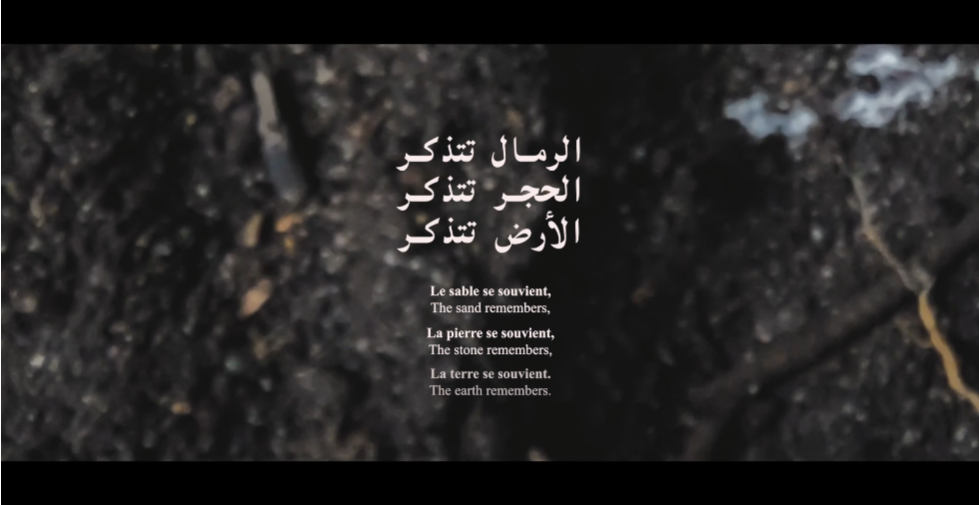
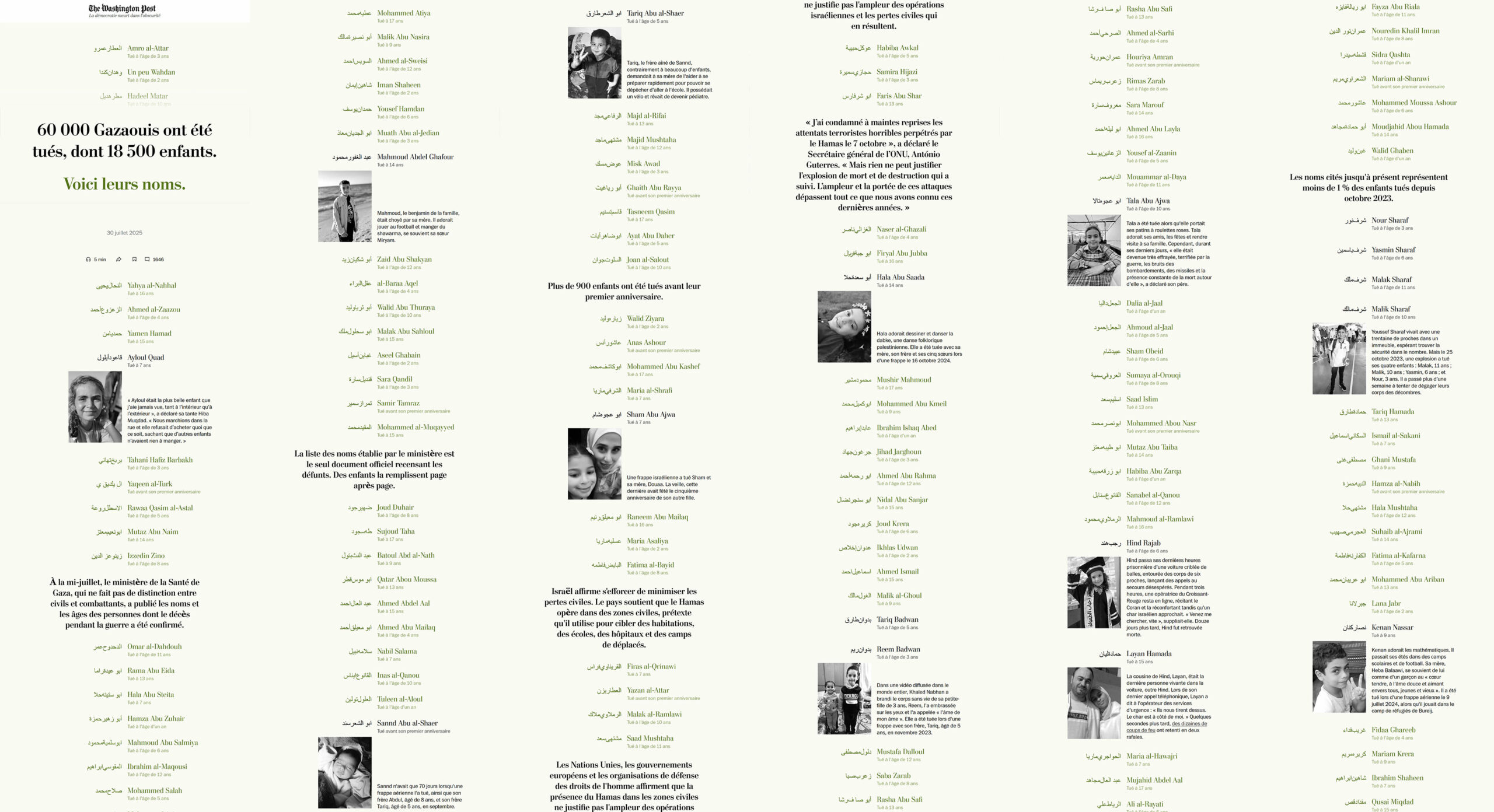
Chaque chaussette retirée est à la fois une disparition et une contribution. Ainsi, le territoire se recompose symboliquement à partir des traces laissées par ceux qui l’ont habité ou l’habitent encore. La vidéo renvoie inévitablement à l’actualité. Le nombre de morts et de disparus ne cesse d’augmenter, transformant les noms propres en une litanie quotidienne. C’est pourquoi le son joue un rôle essentiel en transformant le geste en acte mémoriel : à chaque chaussette retirée correspond l’énonciation du nom d’une personne. Les voix—masculines et féminines—donnent à chaque geste une dimension de comptage, presque de rituel. La multiplication de ces noms propres construit une forme de présence collective qui résiste à l’anonymisation des statistiques.
Face à l’ampleur des pertes humaines dans le conflit, la simple prononciation des noms devient un acte politique et éthique. »
© Pei-Chun LAI, François LECLERE
et Véronique SAPIN, Avril 2026 – Turbulences Vidéo #131 | Prix VIDEOFORMES 2026 de la Ville de Clermont-Ferrand
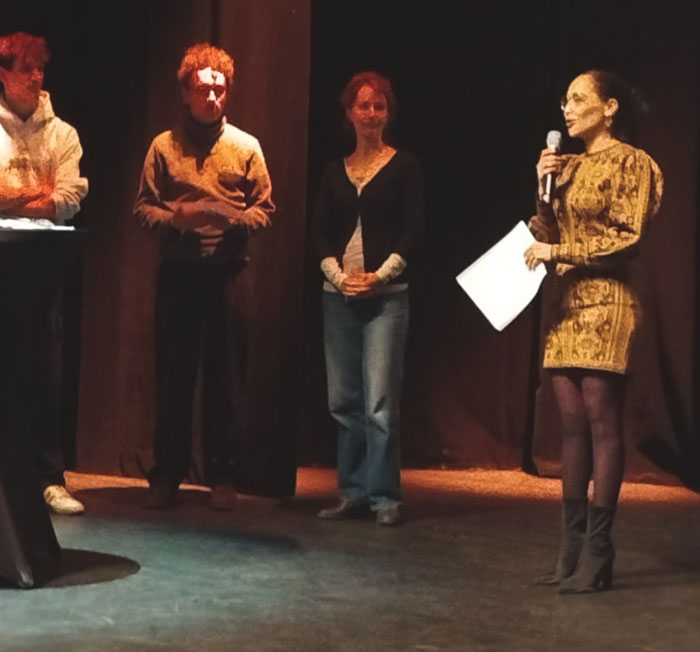
Clermont-Ferrand City Award at the 41st VIDEOFORMES International Festival of Hybrid & Digital Arts – 2026
Official Selection at the Côté Court Festival 2026 – Pantin, France – Essay / Video Art category
Official Selection at the Les Instants vidéo Festival 2026 – Marseille, France
Radio interview and Invisible Forces podcast by Marine Lemaire
Video interview, Zohra Hassani, Director of Under the Skin of Palestine, by Mai Linh
جائزة مدينة كليرمون-فيران بمناسبة الدورة الحادية والأربعين من المهرجان الدولي للفنون الهجينة والرقمية VIDEOFORMES – 2026
اختيار رسمي في مهرجان Côté Court 2026 – بانتان، فرنسا – فئة المقال / فن الفيديو
اختيار رسمي في مهرجان Les Instants Vidéo 2026 – مرسيليا، فرنسا
مقابلة إذاعية وبودكاست « القوى الخفية » من إعداد ماريـن ليمير
مقابلة فيديو، « زهرة حسّاني، مخرجة فيلم تحت جلد فلسطين »، من إعداد ماي لينغ
« Under the Skin of Palestine by Zohra HASSANI
The artist constructs a device of great sobriety: the image is divided vertically in two. On the left, framed at knee height, two legs wear layered socks of all sizes, colors and styles. The gesture is simple: the performer removes the socks one by one and throws them. The socks fall onto the right half of the image, where their accumulation contributes to the formation of a collective figure: the silhouette of Palestine.
This form is unstable and liable to unravel at any moment. It recalls that the map itself is not a fixed given, but a field of struggles, projections and memories.
The vertical line dividing the image can be read as a border, but also as a seam — a fragile line attempting to hold two realities together.
The work displaces the signs of violence and historical event into an economy of modest gestures. By choosing clothing — that which touches the skin and accompanies daily life — the artist inscribes geopolitics into the most ordinary bodily experience.
Each sock removed is at once a disappearance and a contribution. In this way, the territory symbolically reconstitutes itself from the traces left by those who have inhabited or still inhabit it. The video inevitably refers to current events. The number of deaths and disappearances continues to rise, transforming proper names into a daily litany. This is why sound plays an essential role, transforming the gesture into an act of memory: each sock removed corresponds to the utterance of a person’s name. The voices — male and female — give each gesture a dimension of counting, almost of ritual. The multiplication of these proper names constructs a form of collective presence that resists the anonymisation of statistics.
In the face of the scale of human loss in the conflict, the simple act of pronouncing names becomes a political and ethical act. »
© Pei-Chun LAI, François LECLERE
et Véronique SAPIN, April 2026 – Turbulences Vidéo #131 | Prix VIDEOFORMES 2026 de la Ville de Clermont-Ferrand
جدول العروض
Screening Schedule
*In the presence of Zohra Hassani
March 14, 2026: Maison de la Culture, Boris-Vian Hall, Clermont-Ferrand, France | Videoformes Festival *
June 6, 2026: Ciné 104 – Pantin, France | Côté Court Festival *
June 8, 2026: Ciné 104 – Pantin, France | Côté Court Festival
19 – 20 September, 2026: Oratory Chapel – Clermont-Ferrand, France | Digital Matrimoine, European Heritage Days
24 October, 2026: La Friche belle de Mai – Marseille, France | Les Instants vidéo Festival
التوزيع والاقتناء
Diffusion & Acquisition
Pour toute demande de projection, d’exposition ou d’acquisition :
For any screening or acquisition enquiry :
عربي لأي طلب عرض أو اقتناء: